
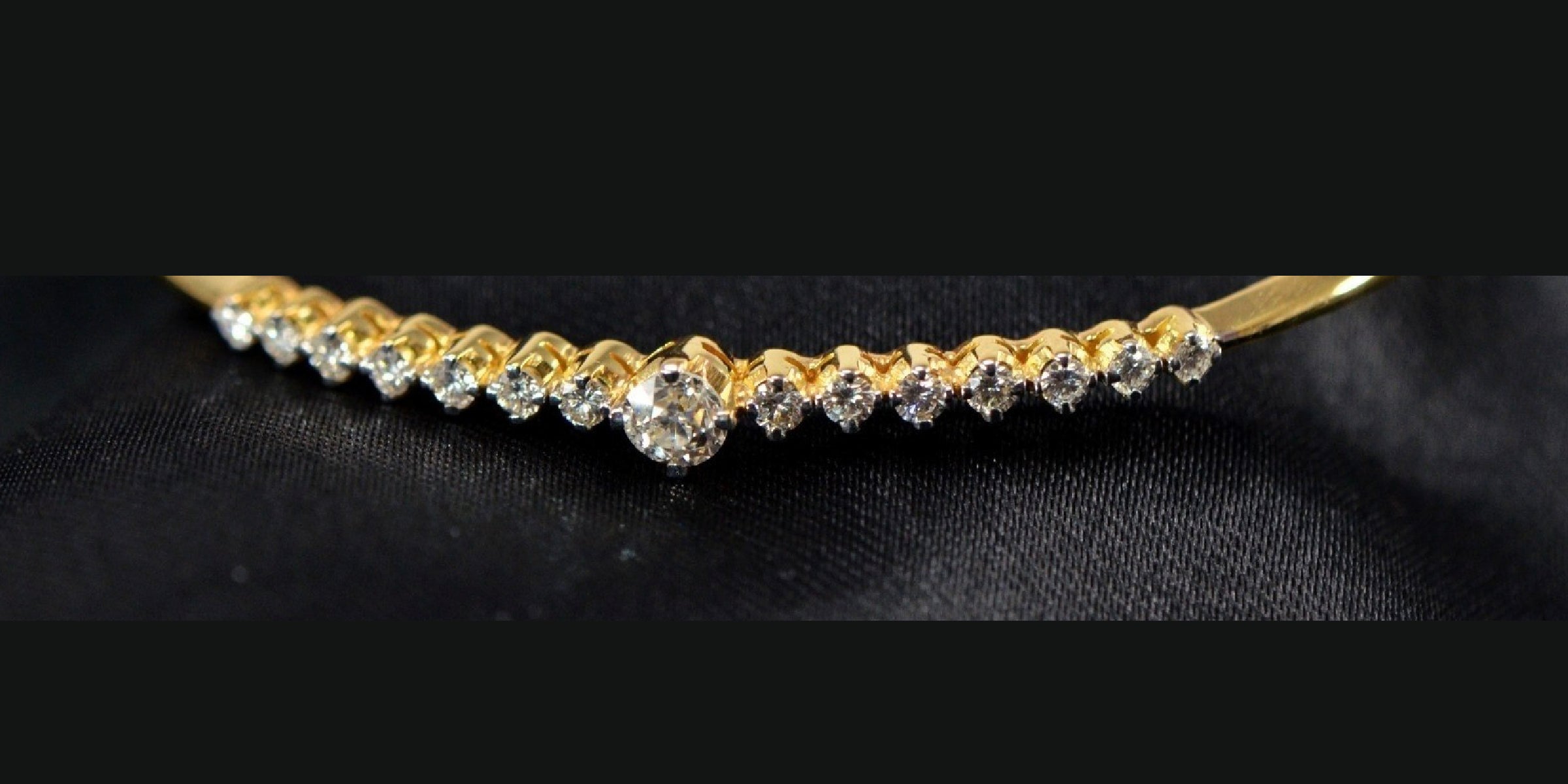
How to Spot a Well-Set Diamond: A Jeweller’s Checklist
When purchasing diamond jewellery, the untrained eye naturally gravitates toward the 4 Cs, carat, color, clarity, and cut. While these factors dictate a stone's intrinsic value, the true hallmark of fine jewellery lies in an element that is frequently overlooked: the quality of the setting.
A masterfully cut diamond can lose its brilliance, comfort, and structural security if it is poorly mounted. Conversely, a professionally executed setting acts as an architectural frame, engineered to optimize light performance, ensure lifelong durability, and safeguard your investment.
True luxury is defined by microscopic precision and uncompromising craftsmanship. Below is the definitive master checklist to help you evaluate the structural and aesthetic integrity of a diamond setting.
The Master Setting Checklist
1. Optical and Geometric Alignment
A flawlessly set diamond must exhibit absolute symmetry from every viewing angle.
- The Standard: The stone must sit perfectly level, centered, and straight within its mounting.
- What to Look For: Examine the piece from the profile (side view) and overhead. Any slight tilting, rotation, or uneven placement disrupts the intended light paths, severely diminishing the diamond's brilliance and creating a visually unbalanced piece.
2. Precision-Engineered Prongs
Prongs (or claws) bear the critical responsibility of securing the gemstone while minimizing metal interference to allow maximum light entry.
- The Standard: High-quality prongs should be perfectly symmetrical, highly polished, and meticulously shaped (e.g., round, claw, double-claw, or V-shaped) to match the specific geometry of the diamond.
- Red Flags: Beware of bulky, uneven, or sharp prongs. Overly thick prongs overpower the diamond and obscure its surface area, while excessively thin prongs lack the structural integrity required to withstand daily wear.

3. Absolute Seamlessness (No Visible Gaps)
The intersection where the diamond meets the precious metal requires micro-tolerance engineering.
- The Standard: The diamond should sit flush against its seat with zero visible gaps between the pavilion (lower body) of the stone and the metal mounting.
- The Risk: Visible spaces indicate a mass-produced, one-size-fits-all casting rather than a customized, hand-fit setting. A lack of precise contouring compromises the stone's stability.
4. Structural Stability and Security
A secure setting prevents catastrophic stone loss and minimizes micro-movements that can erode the metal over time.
- The Diagnostic Test: Experts utilize the "Nudge Test" to verify stability. Hold the piece close to your ear and gently tap the stone with a soft, non-marring tool (or lightly shake the piece). Any audible rattling or perceptible movement indicates an unsecure setting that requires immediate jeweller intervention.
5. Ergonomics and Tactile Comfort
Fine jewellery must be a seamless extension of the wearer. Exceptional craftsmanship prioritizes how a piece feels against the skin and interacts with wardrobe textiles.
- The Standard: The entire piece should feel smooth, with perfectly balanced weight distribution and no rough edges.
- The Diagnostic Test: Run the jewellery across a delicate fabric, such as silk or microfiber. High-quality settings will glide effortlessly across the surface, whereas poorly finished prongs or unpolished edges will catch and snag the fibers.
6. The Absence of Hidden Structural Flaws
In commercial-grade jewellery, heavy or strategic metalwork is occasionally used to conceal underlying gemstone defects.
- The Standard: Premium settings are designed to elevate a stone, never to hide it.
- What to Look For: Be discerning if a piece features unusually wide prongs or thick bezels that seem disproportionate to the design. Some manufacturers use oversized prongs to mask chips, heavy inclusions, or natural blemishes along the diamond's girdle.
Why Bench Craftsmanship Dictates Long-Term Value
Diamond setting is a highly specialized discipline demanding years of rigorous training, an intimate understanding of gemology, and expert-level metallurgy. Investing in superior bench craftsmanship yields direct long-term benefits:
- Optimized Refraction: Correct positioning ensures facets interact with light exactly as the cutter intended, maximizing fire and scintillation.
- Generational Durability: Properly tensioned metal resists deformation, protecting your heirloom for generations.
- Risk Mitigation: Precision mounting eliminates the micro-frictional wear that causes diamonds to loosen or suffer stress fractures.
Final Thoughts
A diamond's true beauty is realized only when the natural brilliance of the stone meets the precision of a skilled setter. When selecting your next fine jewellery piece, look beyond the grading certificate. Inspect the alignment, analyze the prongs, test the comfort, and demand flawless workmanship. These subtle technical details ultimately reflect the skill, care, and quality behind the piece.
Conclusion: The Ultimate Intersection of Rarity and Artistry
Fine diamond jewellery is a profound convergence of nature's geological rarity and human technical mastery. While the intrinsic value of a diamond is dictated by its natural characteristics, its ultimate legacy as an heirloom is determined by the artisan who sets it.
A perfectly executed setting does not merely offer aesthetic refinement. It provides peace of mind that your investment is structurally secure for generations to come.
True excellence requires bypassing mass production in favor of rigorous bench standards. Every fine diamond should be individually articulated, securely mounted, and inspected under high magnification to uphold the highest standards of jewellery craftsmanship. By choosing flawless workmanship, you ensure that your diamond's brilliance is preserved, celebrated, and treasured for a lifetime.

Written by Sultan Gems & Fine Jewellery







Leave a comment
This site is protected by hCaptcha and the hCaptcha Privacy Policy and Terms of Service apply.